
Digital evidence is kind of a big deal in modern investigations, and video recordings are often , like, some of the most crucial bits of proof that investigators can get. Surveillance systems, mobile devices, dashboard cameras, and security networks are always churning out huge amounts of footage, and then investigators have to parse it and make sense of it in a way that stays accurate. Because that need keeps growing, advanced Forensic Video Analysis Software has turned into a sort of must-have for people who work with digital evidence.
These systems help investigators move through tasks faster, keep the evidence quality more intact, and examine complicated video recordings using specialized forensic processing options, not just generic “watch and hope” tools.
Managing increasing volumes of video evidence
A lot of investigations end up with footage from several cameras, plus more than one recording source. And the devices don’t always match… different resolutions, different frame rates, and different compression formats, so the examination can feel like a real puzzle.
Advanced Forensic Video Analysis Software tackles those headaches by backing a broad lineup of video formats and processing workflows. Instead of depending on simple playback applications, investigators can work inside dedicated forensic environments built for handling evidence in a controlled, traceable way. This also supports better efficiency, so investigators can process video content more effectively even when the case gets messy.
Enhancing workflow efficiency
Old-school video review tends to be a chain of separate steps, things like acquisition, conversion, synchronization, and enhancement. Those split-up workflows can drag investigations out and they can also raise the odds of mistakes, sometimes subtle ones.
Newer forensic systems blend many of those tasks into one environment. Investigators can capture, process, synchronize, and review footage inside a single workflow, which helps the speed and accuracy of video forensic analysis. In other words, professionals spend less time wrestling technical limitations , and more time interpreting what the footage is actually showing.
Preserving evidence integrity
Keeping the integrity of digital evidence is probably the most important duty in forensic work. If the processing introduces unnecessary changes or causes extra degradation, the reliability and credibility of the recording can take a hit.
Professional Forensic Video Analysis Software is built to support lossless acquisition and controlled processing methods that keep the original quality as intact as possible. It also supports frame accuracy and careful handling of synchronized audio, which strengthens the overall evidence reliability. When investigators preserve the original data quality, they can do video forensic analysis with more confidence, and the recordings stay appropriate for future review and documentation.
Working with multi-camera recordings
A lot of surveillance systems record multiple camera feeds at the same time. Watching those recordings separately can make it hard to rebuild what really happened, especially if you’re trying to connect events across angles.
Advanced forensic tools provide synchronization and multi-channel review, so investigators can compare footage from different camera views on a shared timeline. That improves situational awareness and makes it easier to map movement and activity inside the scene, rather than relying on fragments that don’t quite connect.
Improving image clarity
Video evidence doesn’t always come from perfect conditions. You might get poor lighting, low resolution, motion blur, and compression artifacts, all of which can hide meaningful details.
Modern forensic video analysis software includes enhancement instruments meant to improve visibility and bring out image details without changing the integrity of the evidence. That helps investigators perform more accurate video forensic analysis, especially when the footage is difficult or “messy.”
Flexible processing and modular workflows
Case needs can vary a lot depending on what kind of situation investigators are dealing with. Some investigations want stabilization and enhancement, while others lean more toward synchronization, reconstruction, or calibration.
Modular forensic systems let investigators configure workflows on the fly, using different processing modules and analytical functions. That flexibility helps professionals handle complex scenarios while keeping operations efficient and organized, instead of forcing one rigid pipeline onto every job.
Camera calibration and spatial accuracy
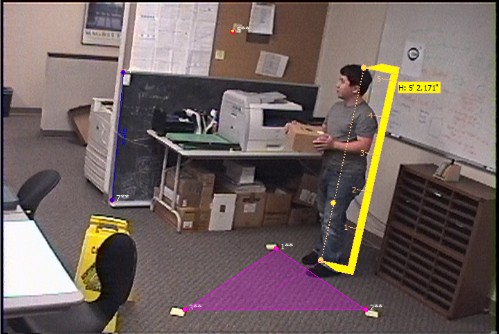
Camera lenses and recording angles can introduce distortions that mess with measurements and spatial interpretation in the footage.
Advanced forensic systems include calibration and correction tools that restore more accurate image geometry. Fixing distortion boosts measurement precision and makes reconstruction of scenes and events more dependable. This matters a lot in investigations involving positioning analysis and spatial interpretation.
Integration with modern digital investigation workflows
As investigations become more data-driven, video evidence is often paired with other digital materials like photographs, mapping data, and spatial datasets. Contemporary forensic platforms support integration across different evidence types, helping investigators build broader analytical workflows.
This kind of integration expands the value of video forensic analysis, and it also improves the odds of reconstructing events accurately instead of treating video as isolated.
Supporting long-term investigative needs
The need for digital evidence processing keeps rising as surveillance technology spreads further. Investigators want systems that can adapt to changing formats, higher-resolution recordings, and more intricate workflows over time.
Professional Forensic Video Analysis Software offers the scaling ability and flexibility needed for these long-term requirements, while still keeping consistent analytical performance. And as digital evidence becomes even more central to investigations, these systems will keep playing an important role in helping professionals process and interpret video recordings more efficiently, with less friction and more confidence.
Conclusion
Video evidence has become one of the most valuable resources in modern investigations, but processing and analyzing footage effectively requires specialized tools and workflows. Advanced Forensic Video Analysis Software helps investigators manage complex recordings, preserve evidence quality, and streamline analytical processes.
With capabilities such as multi-channel synchronization, enhancement tools, modular workflows, and calibration features, these systems strengthen the overall effectiveness of video forensic analysis across a wide range of investigative scenarios.
By combining precision, flexibility, and advanced processing capabilities, modern forensic platforms continue to improve how investigators interpret and analyze digital video evidence.